I wasn’t expecting much when I set this up—but it ended up being one of the easiest bilateral coordination activities for kids we’ve tried. No fancy supplies, no complicated prep… just a quick activity that got my preschooler focused, engaged, and even using both hands without me prompting at all.
At first glance, this is just another Preschooler activity.
But what’s actually happening here is something that supports brain development, coordination, and pre-writing skills—all at the same time.
And the best part? Your child might start doing it naturally, just like mine did.
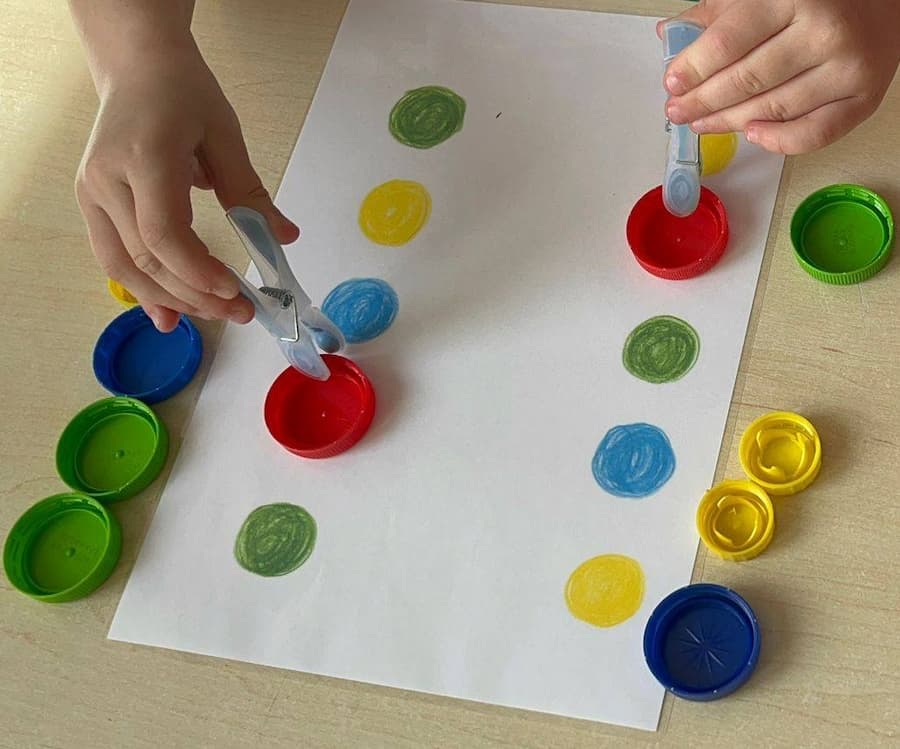
What Is Bilateral Coordination (and Why It Matters for Kids)
What does “bilateral coordination” mean?
Bilateral coordination activities require both sides of the brain to work together.
In simple terms, it means your child is using both sides of their body at the same time—like using both hands or both legs in a coordinated way. When this happens, the brain is communicating more effectively, helping movements become smoother and more automatic over time.
This is exactly why activities that use both hands are so important during the preschool years.
Why it matters for everyday skills
This skill shows up in so many daily activities, like:
- Writing (one hand writes, the other stabilizes the paper)
- Cutting with scissors
- Getting dressed (zipping, buttoning)
- Playing games and sports
It might look simple, but it’s doing a lot behind the scenes.
The Easy Bilateral Coordination Activity We Tried
This is one of those low-prep activities that doesn’t look like much—but works on so many skills at once.
All you need is a quick setup and a few everyday items.
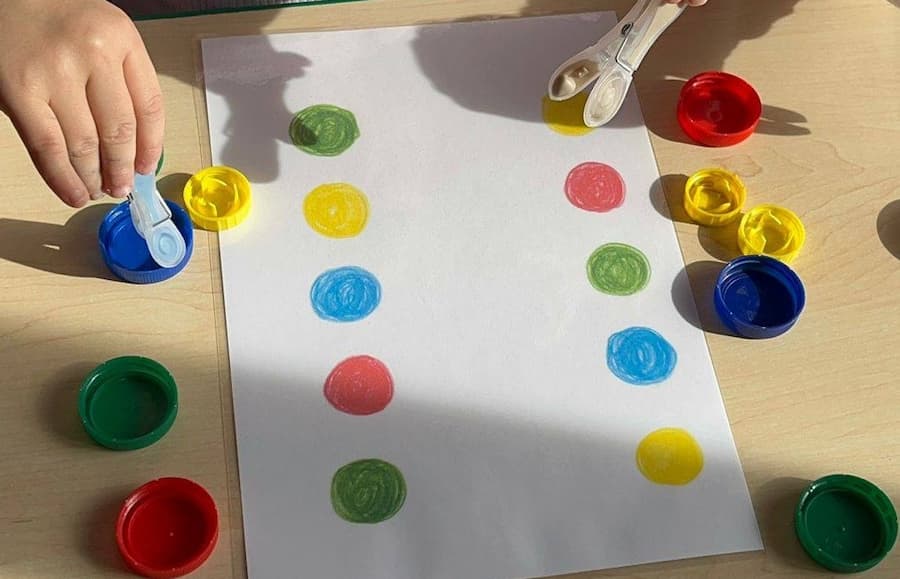
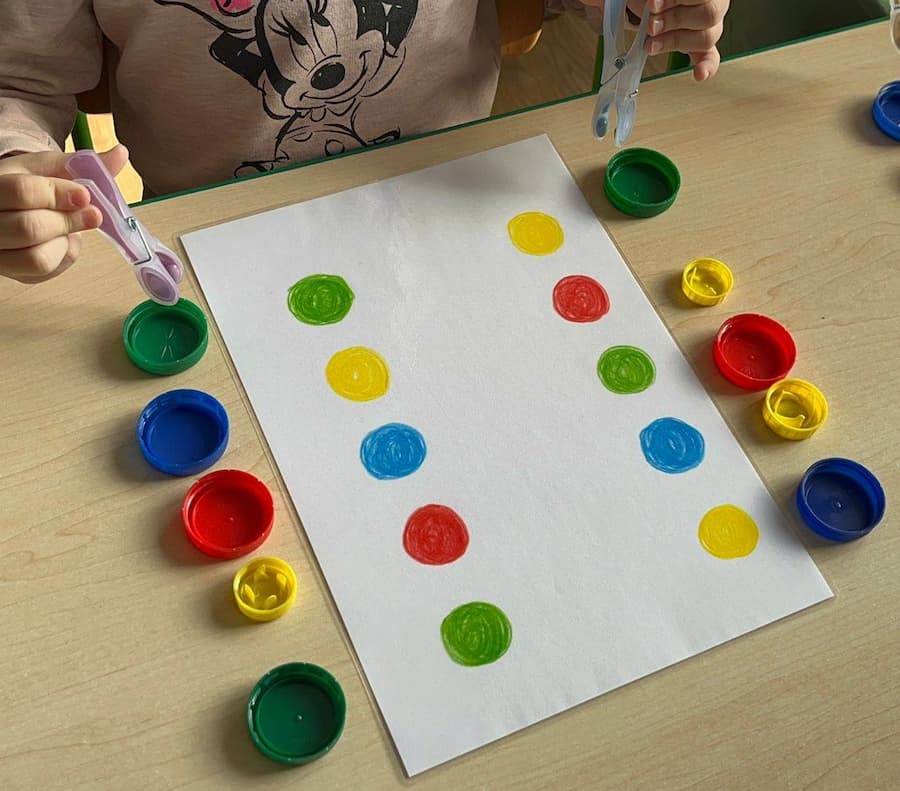
Materials You’ll Need
- White paper
- Markers (red, blue, green, yellow)
- Bottle caps (matching colors if possible)
- Clothespins (or toddler tongs)
How to Set Up This Activity
Step 1 – Draw the color circles
Draw different colored circles across your paper.
Step 2 – Scatter the bottle caps
Place the caps randomly around the page (not on the circles yet).
Step 3 – Introduce the clothespins
Hand your child one… or two if you want to encourage both hands.
How Kids Play (What Actually Happens)
At first, it looks like a simple matching game:
- Pick up a bottle cap
- Find the matching color
- Place it on the circle
But then something interesting can happen…
The Moment That Changed Everything (Using Both Hands)
At one point, my preschooler picked up a clothespin in each hand and started using both at the same time.
No instructions. No prompting.
Just naturally experimenting.
And that’s when this activity shifted from “simple matching game” to something much more powerful.
Using both hands like this strengthens how the brain connects and communicates between both sides—and that’s a huge part of early development.
Why This Activity Is So Powerful for Development
Fine motor skills
Squeezing clothespins helps build the hand strength needed for writing later on.
Bilateral coordination
Using both hands together strengthens brain integration.
Hand-eye coordination
Kids practice control and accuracy when placing the caps.
Color recognition
Matching colors reinforces early learning in a hands-on way.
Focus and independence
It kept my preschooler engaged way longer than I expected.
How to Encourage Your Child to Use Both Hands
Not all kids will do this right away—and that’s totally fine.
You can gently encourage it by:
- Giving them two clothespins
- Saying, “Can your hands work together?”
- Modeling it yourself (they love to copy!)
- Turning it into a little challenge
Keep it playful and low-pressure.
Easy Ways to Make This Activity More Challenging
Once your child gets the hang of it, you can switch things up:
Assign each hand a color
“Left hand picks blue, right hand picks red”
Add a speed challenge
“Let’s see how fast you can match them!”
Try cross-body movement
Have your child reach across their body—it’s great for brain development.
Add more colors or patterns
Simple changes can keep it feeling new.
Why I Love This Activity
Honestly, it checks all the boxes:
✔ Takes less than 2 minutes to set up
✔ Uses things you already have
✔ Builds real developmental skills
✔ Keeps kids engaged
And it grows with your child as they learn.
FAQ
What age is this activity best for?
Great for toddlers and preschoolers (around ages 2–5).
What if my child can’t use clothespins yet?
Start with their fingers, then introduce clothespins later.
How do I make it easier or harder?
Use fewer colors to simplify—or add patterns and speed challenges to increase difficulty.
If you try this with your kids, I’d love to hear how it goes!