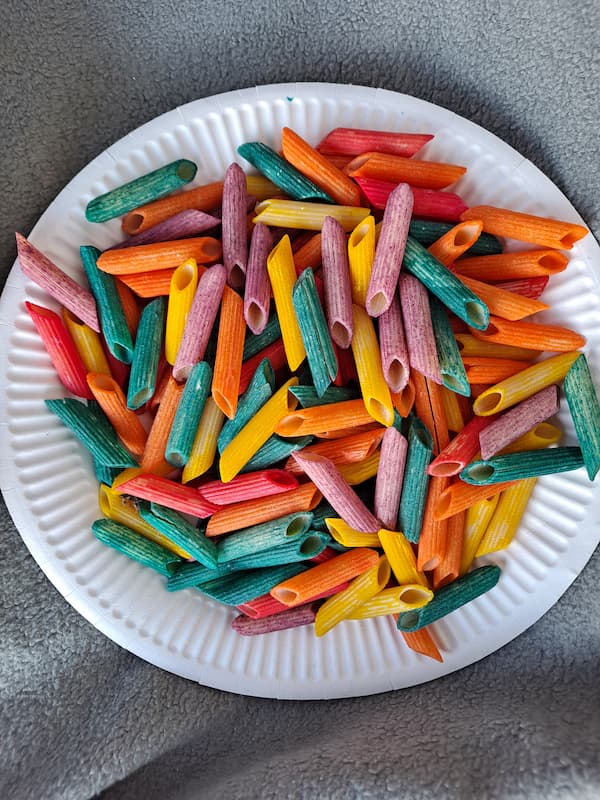
Before you spend money on colorful sensory materials, try this first. With just food coloring, a few drops of vinegar, and dry pasta, you can make a reusable activity supply your toddler will love.
Learning how to dye pasta is one of the simplest DIY projects you can do, and it only takes a few minutes! With just dry pasta, food coloring, and a few drops of vinegar, you’ll have vibrant rainbow pasta ready for sensory bins, playdough invitations, crafts, and learning activities.
As a mom of three, I love preparing materials that we can use again and again. One batch of dyed pasta has lasted us through countless toddler activities—from building colorful coral reefs in playdough to sorting colors, threading necklaces, and creating imaginative small worlds.
Here’s exactly how I make bright, colorful pasta that keeps well for months.
Why You’ll Love This Easy Dyed Pasta Method
✔ Takes less than 5 minutes to prepare
✔ Uses inexpensive pantry supplies
✔ Bright, vibrant colors
✔ Perfect for sensory play
✔ Great for crafts and preschool activities
✔ Stores for months and can be reused many times
Disclosure: This post may contain affiliate links. If you purchase through these links, I may earn a small commission at no additional cost to you. As an Amazon Associate, I earn from qualifying purchases. For more information, please read my full Affiliate Disclosure
Supplies You’ll Need
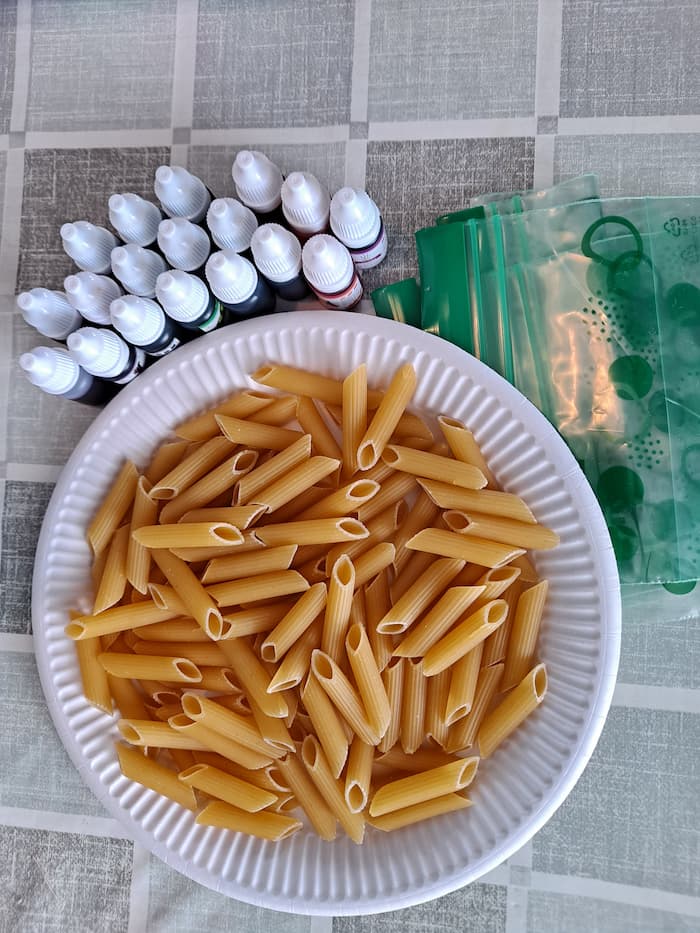
- Dry pasta (I used penne, but any shape works)
- Food coloring
- White vinegar
- Zip-top bags
- Spoon (optional)
- Paper plates, parchment paper, or a baking tray for drying
How to Dye Pasta
Step 1: Divide the Pasta
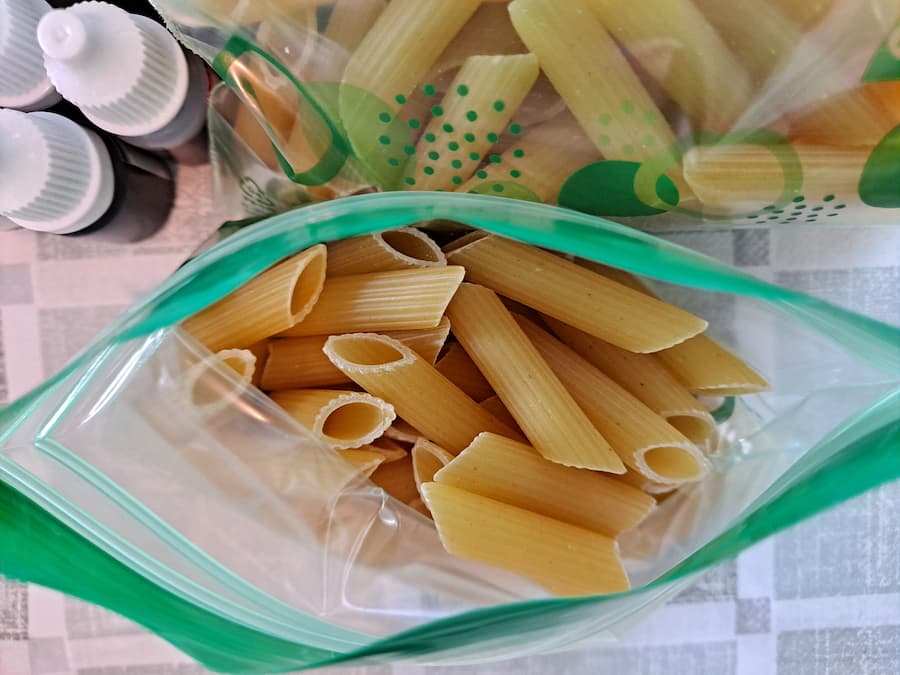
Pour dry pasta into separate zip-top bags.
I like using one bag for each color so the colors stay bright and don’t mix together.
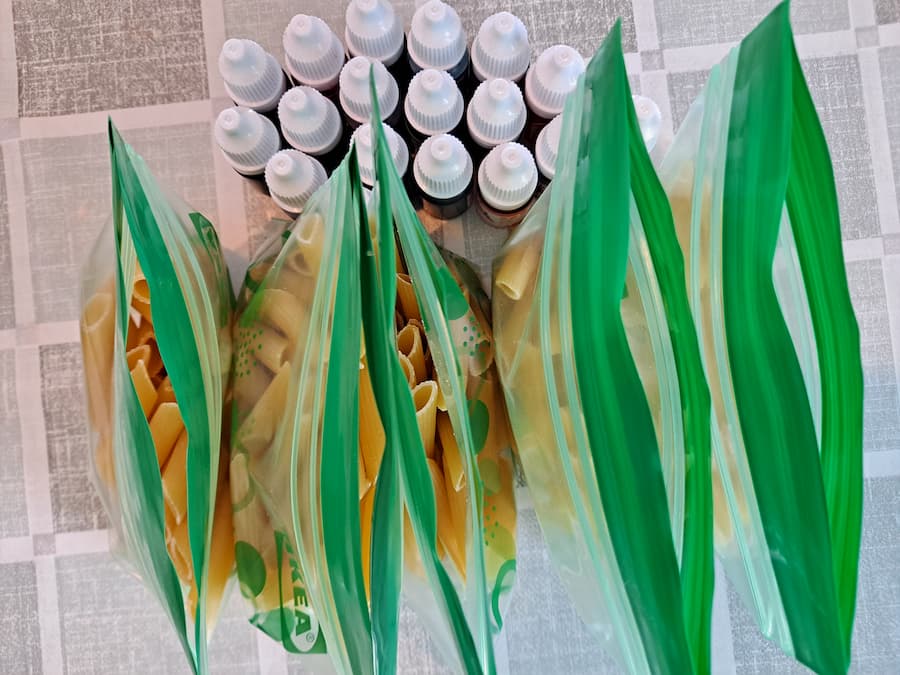
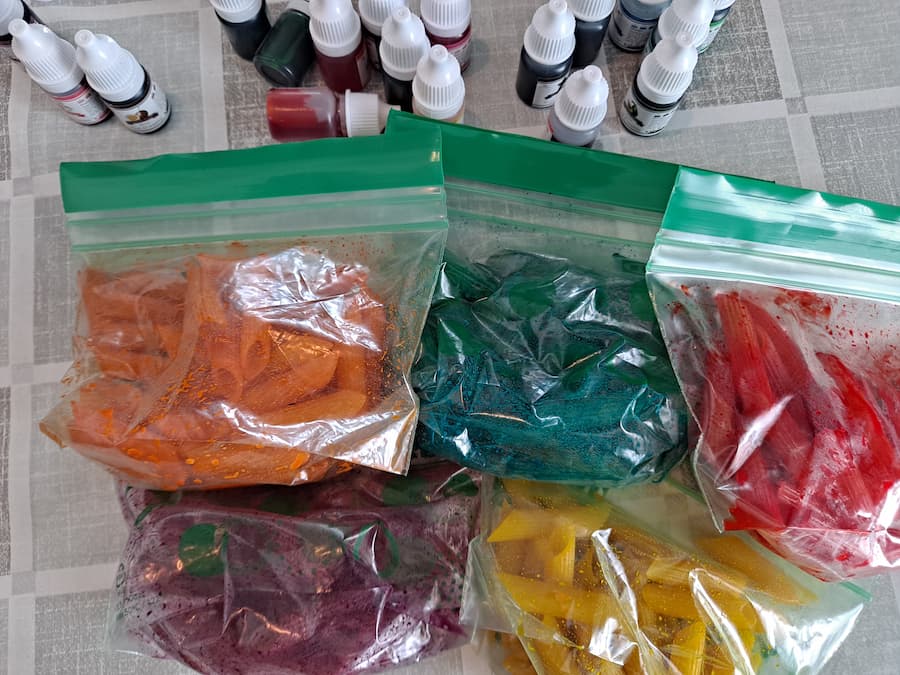
You can make as many colors as you’d like. I chose:
Step 2: Add the Food Coloring
Add several drops of food coloring to each bag.
If you want richer colors, simply add a few extra drops.
There’s no need to be exact—the color is very forgiving.
Step 3: Add a Few Drops of Vinegar
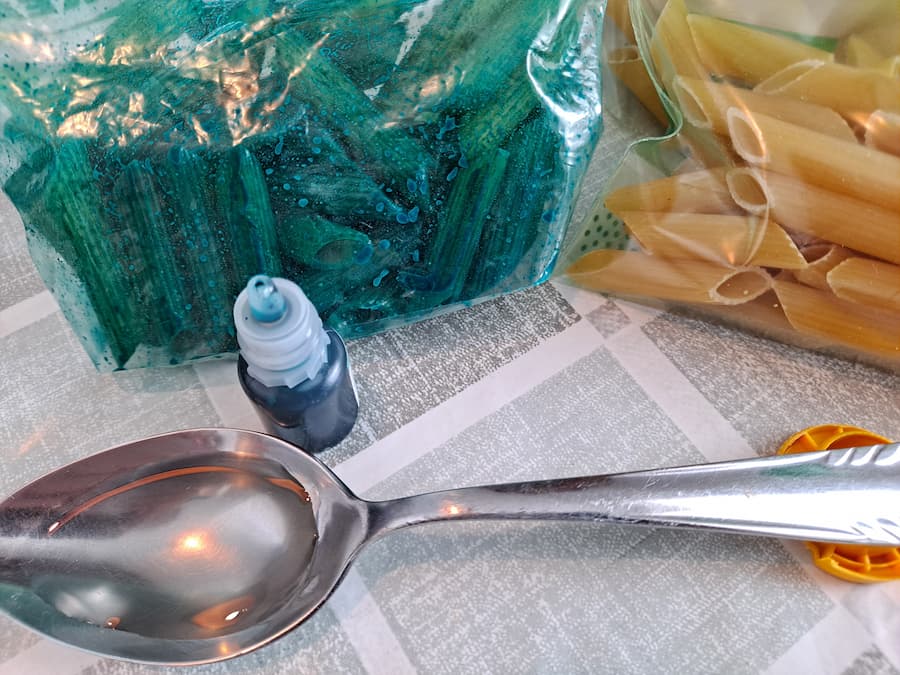
Next, add just a few drops of white vinegar to each bag.
The vinegar helps the food coloring spread evenly over the pasta and creates brighter, longer-lasting colors.
You don’t need much—just enough to lightly coat the pasta.
Step 4: Shake the Bag
Seal the bag tightly.
Now shake, turn, and gently massage the pasta until every piece is coated.
This is actually one of my favorite parts because toddlers love helping with the shaking!
Watching the pasta slowly change color feels like a little science experiment.
Step 5: Dry the Pasta
Pour the colored pasta onto a baking tray, parchment paper, paper plate, or cooling rack.
Spread it into a single layer.
Allow it to dry completely.
Depending on your home’s humidity, this usually takes several hours or overnight.
Once dry, the pasta won’t feel sticky.
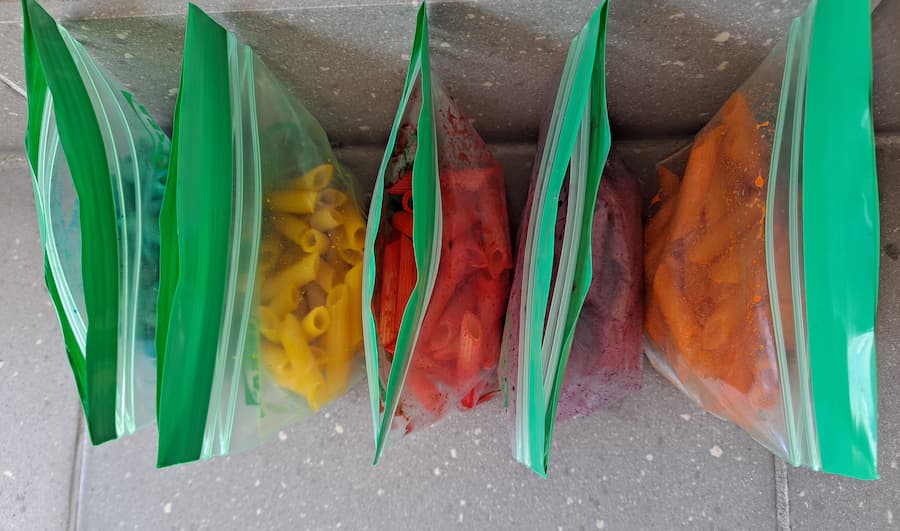
Step 6: Store for Future Activities
Store each color in an airtight container or zip-top bag.
Because the pasta is uncooked, it can be reused over and over for many different activities.
I keep several bags ready in our craft cupboard so they’re always available when inspiration strikes.
Tips for Bright, Vibrant Colors
Don’t add too much vinegar.
A few drops are plenty. Too much liquid can soften the pasta.
Use liquid food coloring.
Liquid food coloring spreads quickly and coats the pasta evenly.
Shake well.
The more you shake and massage the bag, the more evenly the color covers the pasta.
Dry completely.
This is the most important step.
Completely dry pasta stores much better and won’t transfer color during play.
How to Dye Pasta for Sensory Play
Dyed pasta makes an amazing sensory material because it offers:
- Bright colors
- Interesting textures
- Different shapes
- Fun sounds when scooped or poured
Some of our favorite sensory activities include:
- Playdough invitations
- Ocean sensory bins
- Color sorting
- Counting games
- Loose parts play
- Fine motor activities
- Small-world play
One of our favorite activities was using colorful penne pasta to create an under-the-sea coral reef by pressing the pieces into homemade playdough. The different colors and shapes looked just like coral growing on the ocean floor, and it kept my toddler happily exploring for ages.
How to Dye Pasta for Crafts
Dyed pasta isn’t just for sensory bins.
It’s also wonderful for craft projects like:
- Pasta necklaces
- Rainbow collages
- Mosaic art
- Christmas ornaments
- Picture frames
- Card making
- Seasonal crafts
- Preschool art projects
Can You Dye Different Types of Pasta?
Absolutely!
Try using:
- Penne
- Rotini
- Shells
- Bow ties
- Wagon wheels
- Elbow macaroni
- Rigatoni
Different shapes add extra interest to sensory play and crafts.
How Long Does Dyed Pasta Last?
If stored in a cool, dry place inside an airtight container or zip-top bag, dyed pasta can last for months.
I simply reuse ours for different activities throughout the year.
If it becomes dirty or damaged after lots of play, it’s easy and inexpensive to make another batch.
Frequently Asked Questions
Can you dye uncooked pasta?
Yes! In fact, uncooked pasta works best because it’s sturdy, easy to color, and lasts much longer than cooked pasta.
Why do you use vinegar?
The vinegar helps the food coloring stick to the pasta and spread more evenly. You only need a few drops.
Will the food coloring come off?
Once the pasta has dried completely, very little color transfers during normal play. Washing hands after play is always a good idea.
Can I use gel food coloring?
Yes. Gel food coloring works well too, although you may need to massage the bag a little longer to distribute the color evenly.
More Ways to Use Dyed Pasta
Once you’ve made a batch, you’ll have endless opportunities for creative play.
Here are some ideas:
- Ocean playdough invitations
- Rainbow sensory bins
- Pasta threading
- Color matching games
- Counting activities
- Pattern making
- Loose parts play
- Fine motor trays
- Preschool crafts
I love making a large batch at once because we can use the same colorful pasta for weeks of different activities.
Learning how to dye pasta is one of those simple projects that gives you so much value for very little effort. In just a few minutes, you can create a reusable sensory material that sparks creativity, strengthens fine motor skills, and keeps little hands happily engaged.
Whether you’re planning a sensory bin, a playdough invitation, or a colorful craft, dyed pasta is an easy addition that makes activities even more exciting. I always keep a few bags in our craft cupboard because they turn ordinary play into something colorful and inviting.
Related Toddler Activities
If you’re looking for more easy ways to use your dyed pasta, you might also enjoy these activities:
- Ocean Playdough Activity – Build a colorful underwater coral reef by pressing dyed pasta into homemade playdough.
- Ocean Sensory Bin – Pair your colorful pasta with ocean animals, shells, and scoops for an engaging sensory experience.
- Fine Motor Activities for Toddlers – Strengthen little hands with simple, low-prep activities using everyday materials.
- Playdough Activities for Toddlers – Discover more creative invitations to play using homemade playdough.