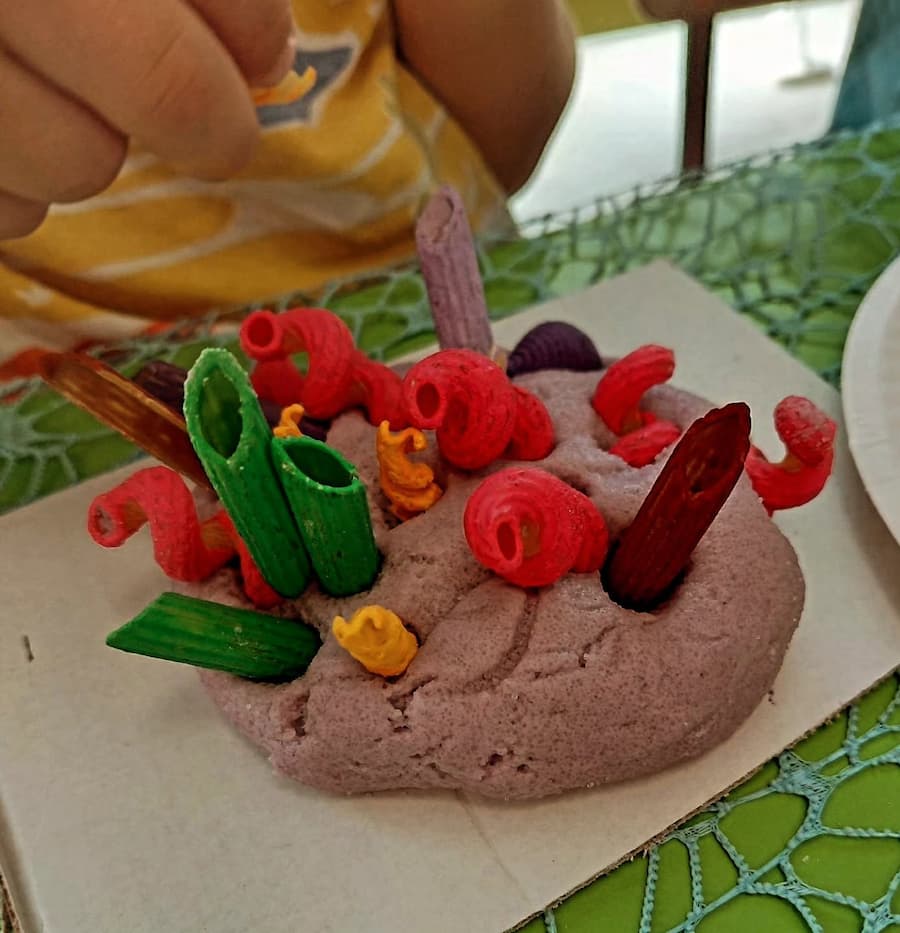
I wasn’t planning an ocean activity that day—I simply handed my toddler a ball of homemade playdough and some colorful dyed pasta. Within minutes, he had transformed them into a vibrant underwater coral reef, happily poking, pulling, rebuilding, and imagining for nearly half an hour.

That’s when I realized the best toddler activities don’t need fancy supplies. Sometimes all it takes is one simple invitation to play that lets their imagination do the rest.
If you’re looking for an easy ocean playdough activity that builds fine motor skills while encouraging creativity, this colorful under-the-sea invitation is one you’ll want to try.
Why You’ll Love This Ocean Playdough Activity
✔ Low-prep
✔ Budget-friendly
✔ Builds fine motor skills
✔ Encourages imaginative play
✔ Reusable materials
✔ Great for toddlers and preschoolers
✔ Perfect for an ocean unit or summer theme
Materials You’ll Need
- Homemade purple playdough (or blue if you prefer)
- Colorful dyed pasta (penne, shells, rotini, etc.)
- Paper fish cutouts or small ocean animal figures
- Paper plate
- Small piece of cardboard or tray
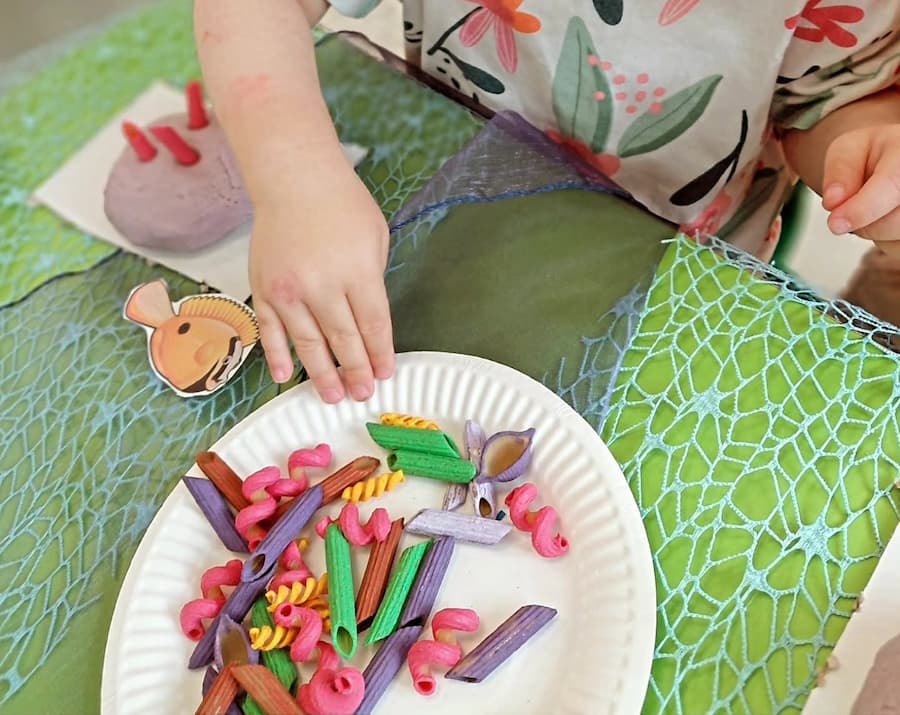
💡 **Before we started building our colorful coral reef, I made a batch of bright dyed pasta using food coloring and a few drops of vinegar. If you haven’t made yours yet, check out my tutorial on How to Dye Pasta first—it only takes a few minutes and you’ll be able to reuse it for lots of different toddler activities.
How to Set Up This Ocean Playdough Activity
Step 1: Prepare the Playdough
Place a large ball of homemade playdough onto a tray or a small piece of cardboard.
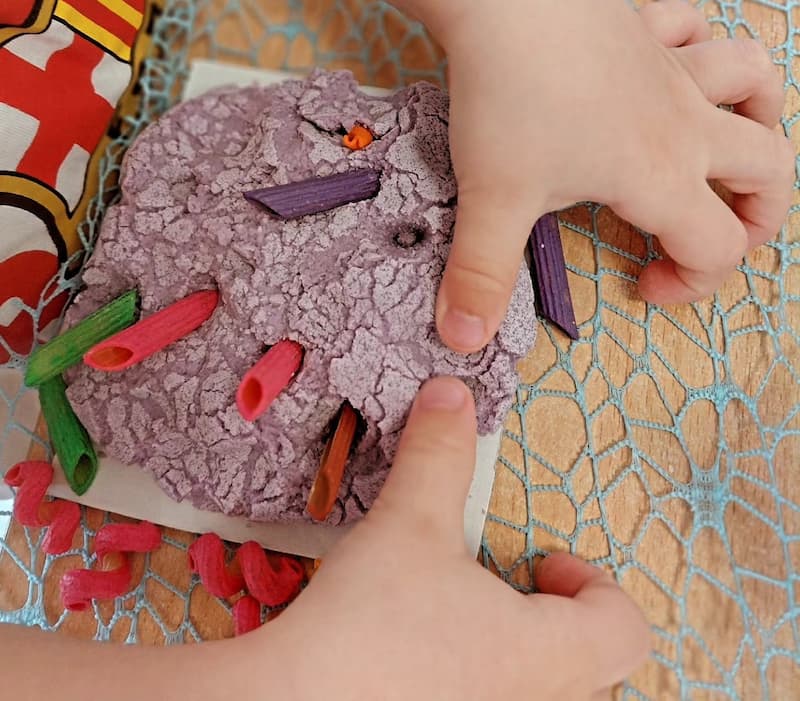
I chose purple playdough because it reminded me of rocks and coral growing along the ocean floor, but blue, teal, or even sandy-colored playdough would work beautifully too.
Step 2: Add the Colorful Pasta
Pour your dyed pasta onto a paper plate beside the playdough.
I used colorful penne in bright shades of:
- Green
- Yellow
- Orange
- Purple
- Red
The vibrant colors instantly made the invitation more exciting for my toddler.
Step 3: Create an Ocean Scene
To spark imaginative play, I added a few laminated fish pictures next to the playdough.
That was all it took for my toddler to begin creating his own underwater world.
You could also use:
- Toy fish
- Sea turtles
- Sharks
- Octopuses
- Shells
- Glass gems
Step 4: Let Your Toddler Explore
There are no rules for this activity.
Simply invite your child to explore.
They might:
- Push pasta deep into the dough
- Pull it back out
- Mix different colors together
- Create coral reefs
- Build underwater caves
- Pretend fish are swimming around the coral
- Fill every tiny space with pasta
This open-ended approach keeps toddlers engaged much longer than activities with a fixed outcome.
What My Toddler Did
At first, my toddler carefully picked up one piece of colorful pasta and slowly pushed it into the soft playdough.
Then he noticed something fascinating.
Every pasta shape made a different hole!
Soon, he started experimenting by pressing pieces in at different angles, mixing colors, and filling the playdough until it looked just like a colorful coral reef.
Once the playdough was full, he pulled everything back out, squished the dough together again, and started all over.
Watching him build, destroy, and rebuild over and over reminded me that toddlers often learn the most through repetition and open-ended exploration.
Skills This Activity Builds
Fine Motor Skills
Pushing pasta into firm playdough strengthens the muscles children will later use for writing, cutting, and buttoning clothes.
Hand-Eye Coordination
Toddlers carefully line up each pasta piece before pressing it into the dough.
Bilateral Coordination
One hand stabilizes the playdough while the other hand inserts or removes the pasta.
Finger Strength
The resistance of the dough provides a gentle hand workout without children even realizing it.
Creativity
There isn’t a right or wrong way to build an underwater world.
Every child creates something completely different.
Imaginative Play
Adding fish transformed a simple fine motor activity into a small-world ocean adventure full of storytelling opportunities.
Easy Ways to Extend the Activity
Once your toddler has finished building a coral reef, try adding a few extra elements to keep the play going.
You could include:
- Blue glass gems for water
- Seashells
- Pebbles
- Aquarium stones
- Wooden sea creatures
- Small scoops
- Tweezers
- Blue fabric or scarves to represent the ocean
- Toy boats
- Treasure coins
Older preschoolers can also sort the pasta by:
- Color
- Shape
- Size
or create simple repeating patterns.
Why We Love This Activity
This activity stayed interesting because there was no finished product to aim for.
My toddler happily built, explored, squished everything flat, and then started all over again.
The colorful pasta encouraged him to experiment, while the playdough provided just enough resistance to strengthen his little hands through play.
It’s one of those invitations that looks incredibly simple but keeps toddlers engaged much longer than you’d expect.
Safety Tips
Because dry pasta pieces can be a choking hazard, this activity should always be supervised closely.
It’s best suited for toddlers and preschoolers who no longer put non-food items into their mouths.
Frequently Asked Questions
Can I use store-bought playdough?
Absolutely! Homemade and store-bought playdough both work well.
What kind of pasta works best?
Penne is one of my favorites because it’s easy for little hands to hold and stands upright in the playdough like coral. Rotini, shells, and rigatoni are also fun choices.
Can I reuse the dyed pasta?
Yes! If it stays clean and dry, you can store it in a zip-top bag or container and use it for future sensory play, crafts, and invitations to play.
Can I use this activity in an ocean unit?
Definitely. It’s a wonderful addition to an ocean-themed week, summer learning activities, or preschool under-the-sea lessons.
More Ocean Activities You’ll Love
If your little one enjoyed this activity, here are a few more ocean-themed ideas to explore:
- How to Dye Pasta – Make your own colorful pasta for sensory play and crafts.
- Ocean Sensory Bin – Scoop, pour, and explore an underwater sensory world.
- Ocean Bubble Foam Sensory Play – A fluffy, foamy ocean adventure that’s perfect for sensory exploration.
- Jello Ocean Sensory Bin – Dig through blue gelatin to rescue sea animals in a taste-safe sensory activity.