If your toddler loves dinosaurs and getting messy, this muddy dinosaur sensory play activity is going to be a huge hit.
It’s simple to set up, incredibly engaging, and packed with learning opportunities. Best of all, it lets toddlers do what they naturally love—digging, squishing, scooping, and exploring—without worrying about keeping things perfectly clean.
This muddy sensory bin quickly became one of those activities that toddlers return to again and again.
Why Muddy Sensory Play Is So Powerful for Toddlers
Mud play offers a rich sensory experience that many indoor activities just can’t replicate. When toddlers play with mud, they’re:
- exploring new textures and temperatures
- building confidence with messy play
- strengthening hands through resistance
- learning cause and effect
Adding dinosaurs turns simple mud play into imaginative storytelling and problem-solving.
What This Muddy Dinosaur Sensory Play Looks Like
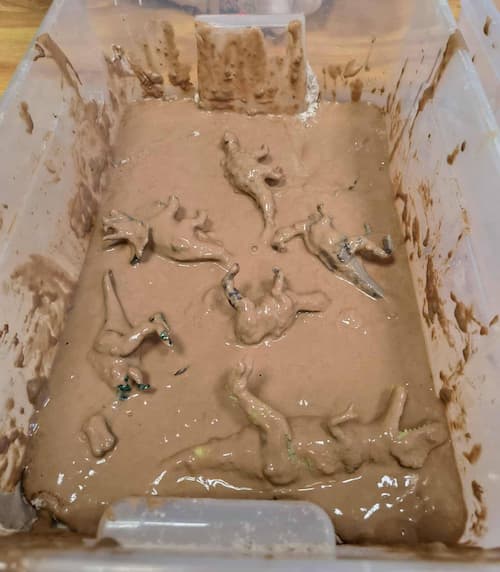
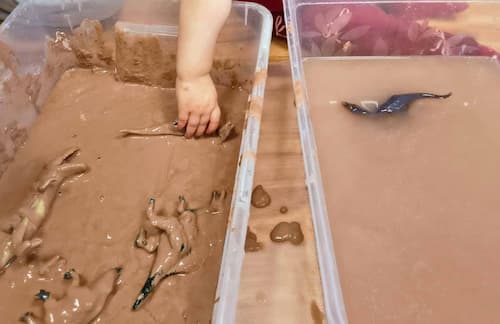
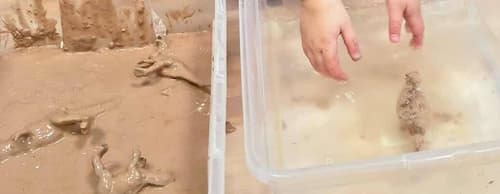
In this activity, small dinosaur figures are hidden inside thick, muddy water in a plastic bin. Toddlers use their hands to dig through the mud, rescue the dinosaurs, and then move them into clean water to wash them off.
The contrast between dirty and clean is deeply satisfying and keeps toddlers engaged for long stretches of time.
Materials for a Muddy Sensory Bin
You don’t need anything fancy to set this up:
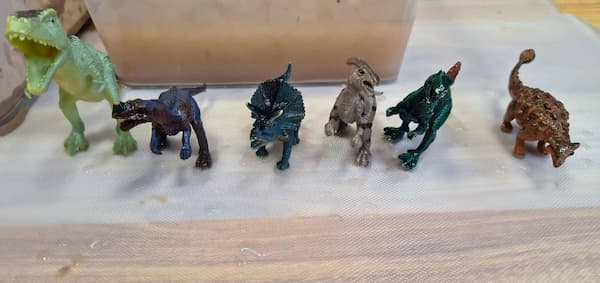
- Plastic dinosaur toys (washable and sturdy)
- Large plastic bins or sensory trays
- Soil or dirt (potting soil works well)
- Water
- Towel, mat, or shower curtain for floor protection
Optional additions:
- Small cups or scoops
- Soft brush or sponge for washing
How to Set Up Muddy Dinosaur Sensory Play
1. Prepare the muddy bin
- Add soil to a large bin.
- Slowly mix in water until the mud is thick and scoopable.
- Place dinosaurs into the mud, covering some completely and leaving others partially visible.
2. Create a washing station
- Fill a second bin with clean water.
- Place it right next to the muddy bin for easy transfer.
Optional: Add a third bin for “clean dinosaurs.”
How to Introduce the Activity to Your Toddler
Keep it simple and inviting:
- “The dinosaurs are stuck in the mud.”
- “Can you find one?”
- “Let’s wash it clean.”
There’s no need to explain further. Toddlers will instinctively know what to do.
What Toddlers Learn While Playing
This muddy sensory bin supports so many areas of development:
- Sensory processing: thick, wet, slippery textures
- Fine motor skills: grasping, squeezing, lifting
- Hand strength: digging through resistance
- Problem-solving: figuring out how to free toys
- Imaginative play: creating dinosaur stories
- Life skills: washing and caring for objects
All of this learning happens through play, without instruction.
Tips for Parents During Muddy Play
- Stay close and supervise, but let your toddler lead
- Narrate occasionally: “So muddy,” “Now it’s clean”
- Expect mess—it’s part of the experience
- Refresh clean water if it becomes too cloudy
Try not to rush the process. Repetition is where the magic happens.
When to End the Activity
It’s usually time to wrap up when:
- mud starts getting thrown rather than explored
- toys are being mouthed
- attention naturally fades
End with a positive cue:
“All done. You worked so hard cleaning the dinosaurs.”
Safety Notes
- Always supervise closely
- Use non-toxic soil and washable toys
- Watch closely for mouthing
- Wash hands thoroughly afterward
Easy Variations to Try
- Swap dinosaurs for farm animals or construction vehicles
- Add rocks, sticks, or leaves for a nature-themed bin
- Do the activity outdoors for easier cleanup
- Use warm water for extra sensory comfort
If you’re looking for an engaging, low-prep activity, muddy dinosaur sensory play is a fantastic option. This muddy sensory bin encourages curiosity, creativity, and deep sensory exploration—all while letting toddlers fully immerse themselves in messy, meaningful play.
Sometimes the best learning happens when kids get a little muddy.