If your toddler loves water play, this citrus sensory bin is a beautiful and refreshing twist on a classic toddler water activity.
We tried several versions — lemons, oranges, grapefruit, even adding flowers — and each one felt completely different while using the same simple setup.
This is one of my favorite summer sensory activities because it’s:
- Bright and colorful
- Naturally scented
- Extremely easy to prepare
- Surprisingly calming
And best of all? It takes under 10 minutes to set up.
Why Try a Citrus Sensory Bin?
A standard toddler water sensory bin is already engaging. But adding real fruit turns it into a multi-sensory experience.
With citrus sensory play, toddlers explore:
- Texture (smooth rind, pulpy centers)
- Temperature (cool water)
- Smell (fresh citrus scent)
- Color contrast (yellow, orange, pink)
- Movement (floating vs tilting slices)
It becomes sensory-rich without adding complexity.
Version 1: Classic Lemon Sensory Bin
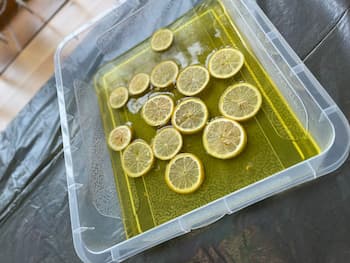
This is the simplest starting point.
What You Need:
- Large plastic bin
- 1–2 inches of water
- Fresh lemon slices (rounds or halves)
- Optional: yellow or green food coloring
What Happens During Play:
Toddlers press on floating slices, watch ripples form, and try to grab slippery pieces. The scent is subtle but noticeable.
This version works beautifully as a lemon sensory bin for toddlers and is perfect for warm-weather play.
Version 2: Mixed Citrus Sensory Bin (Orange + Lemon + Grapefruit)
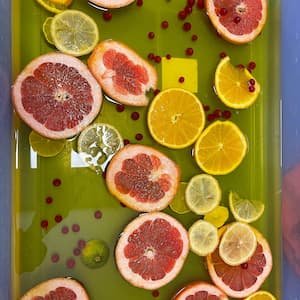
This variation adds visual contrast and richer color.
What You Need:
- Lemon slices
- Orange slices
- Grapefruit halves or rounds
- Optional: green-tinted water
The grapefruit adds a beautiful pink tone, which makes this version especially Pinterest-worthy.
Why It’s Engaging:
Different fruit sizes float differently. Larger grapefruit halves feel heavier. Thin lemon rounds drift quickly.
This introduces early science concepts naturally:
- Size comparison
- Weight differences
- Floating dynamics
It turns simple fruit sensory play into exploratory learning.
Version 3: Citrus + Flowers Sensory Bin
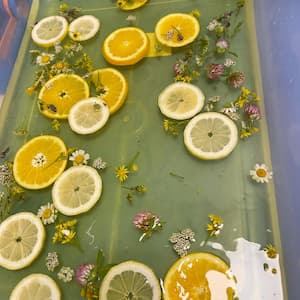
For this version, we added small wildflowers to the citrus water.
This creates a calm, almost spa-like sensory experience for toddlers.
What You Need:
- Citrus slices
- Small flowers (ensure non-toxic varieties)
- Clear or lightly tinted water
This version focuses more on:
- Visual beauty
- Gentle floating
- Careful handling
It slows play down in the best way.
Developmental Benefits of a Citrus Sensory Bin
Even though this looks simple, it supports several core skills.
Fine Motor Development
Grasping slippery slices strengthens finger coordination.
Sensory Processing
Children explore:
- Wet vs smooth surfaces
- Cool water
- Light citrus scent
Early STEM Learning
They observe:
- Floating vs partial sinking
- Ripple effects
- Object movement
Language Development
You can model vocabulary like:
- Lemon
- Grapefruit
- Slice
- Float
- Splash
- Round
- Sour
Simple narration during a toddler water sensory bin builds vocabulary naturally.
Safety Tips for Fruit Sensory Play
- Always supervise closely.
- Keep water shallow (1–2 inches).
- Remove seeds from fruit.
- Discard fruit after play.
- Wash hands afterward (citrus juice can irritate sensitive skin).
If your toddler still mouths everything, stay especially close during play.
Why Citrus Sensory Play Works So Well
With three kids, I’ve learned that the best sensory activities are:
- Low prep
- Open-ended
- Visually engaging
- Flexible across ages
A citrus sensory bin checks every box.
You can adjust it for:
- Babies (very shallow water + large slices)
- Toddlers (free exploration)
- Preschoolers (add scoops, strainers, measuring cups)
It grows with your child.
How This Fits Into Our Sensory Play Series
This citrus sensory bin builds on our earlier:
- Easy Baby Sensory Bin ideas
- Dinosaur Sensory Bin for toddlers
- Lemon sensory water play
If you’re building a rotation of simple, realistic sensory activities, fruit sensory play is an easy addition.