You don’t need a shelf full of expensive Montessori toys to bring Montessori-inspired play into your home. Some of the best Montessori activities for toddlers can be created with simple things you already have in the kitchen, bathroom, or around the house.
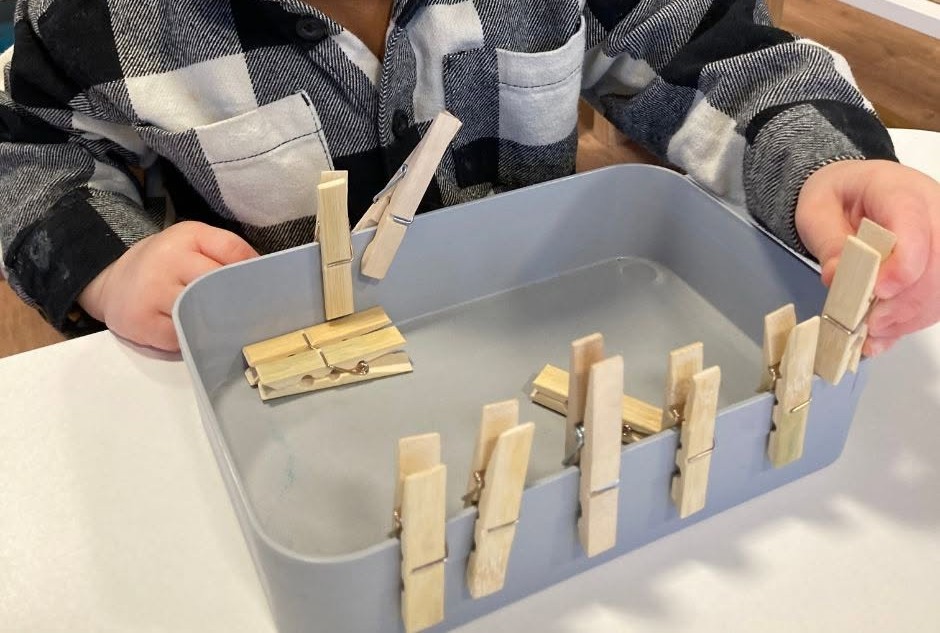
With my own toddler, I’ve found that everyday tasks like pouring water, scooping, transferring, opening containers, and using clothespins can keep little hands surprisingly busy. Even better, these simple activities give toddlers opportunities to practice independence, concentration, coordination, and fine motor skills through real hands-on experiences.
If you’re looking for more simple ways to keep little hands occupied, you might also enjoy my easy toddler activities using things you already have at home or these easy ideas to keep toddlers busy. And if your toddler especially loves picking up, transferring, and manipulating small objects, I have even more fine motor activities for toddlers you can try.

Below, I’m sharing 15 easy Montessori activities for toddlers that are simple to set up, affordable, and realistic for everyday life at home. No complicated preparation or fancy materials required—just plenty of opportunities for your toddler to explore, practice, and do things independently.
1. Sock Hanging Montessori Activity
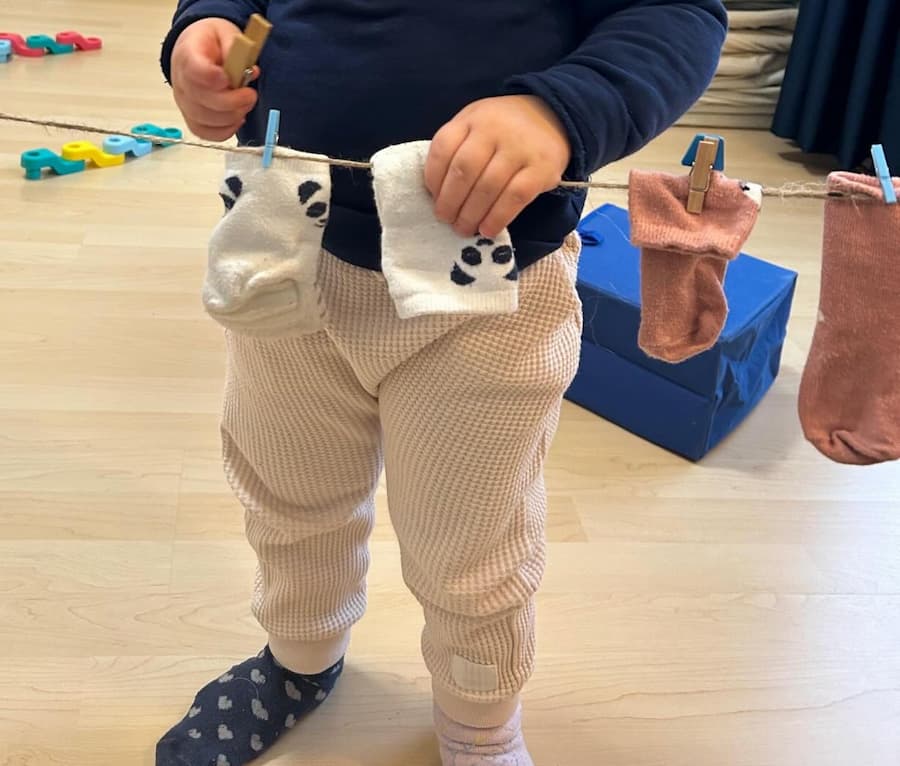
This simple sock-hanging activity is one of my favorite Montessori activities for toddlers because it turns an ordinary household task into hands-on learning.
I simply tied a piece of string at toddler height, gathered a few small socks and clothespins, and showed my toddler how to clip each sock onto the line. It looks incredibly simple, but opening the clothespins, holding the socks in place, and attaching them to the string requires plenty of concentration and hand coordination.
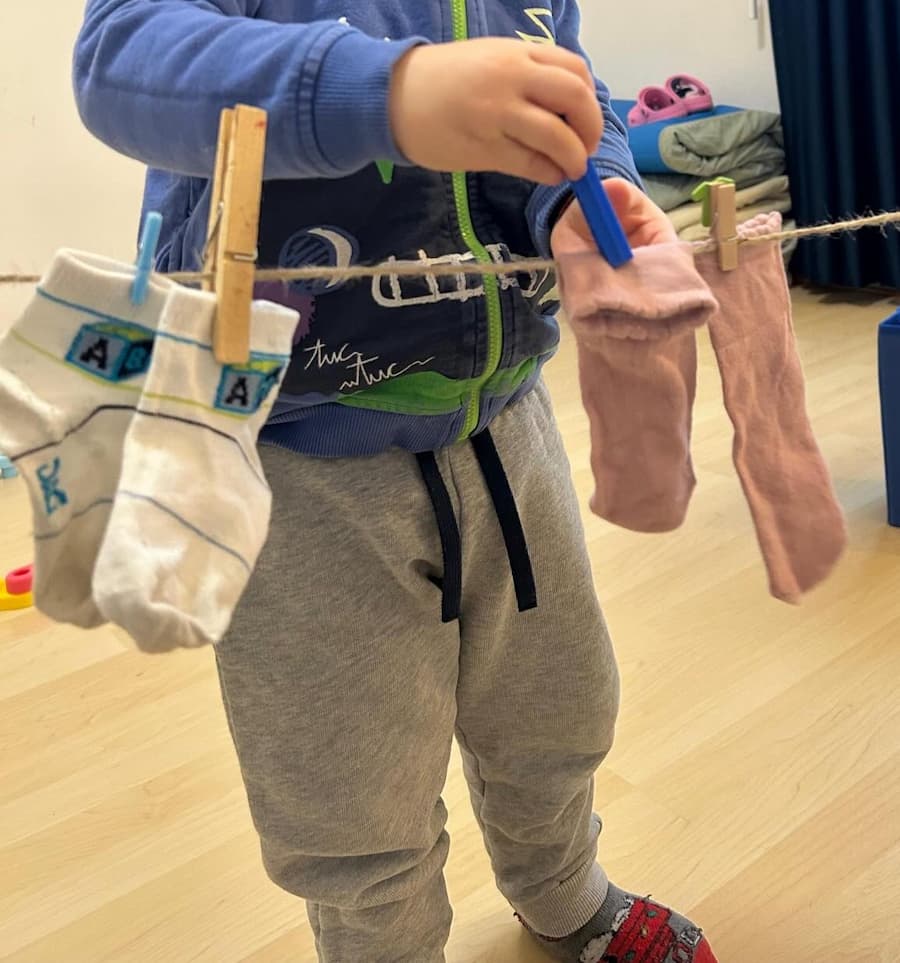
It’s also a wonderful practical-life activity that lets toddlers imitate something they see us doing in everyday life while practicing independence.
What you need: a piece of string, a few socks, and clothespins.
Skills practiced: fine motor skills, hand-eye coordination, concentration, bilateral coordination, and practical life skills.
If your toddler enjoys working with clothespins, try this easy clothespin fine motor activity next for another simple way to strengthen those little hands.
2. Sweep It Up Montessori Activity
Toddlers often want to copy the everyday jobs they see us doing, which is exactly what makes this simple sweeping activity so engaging.
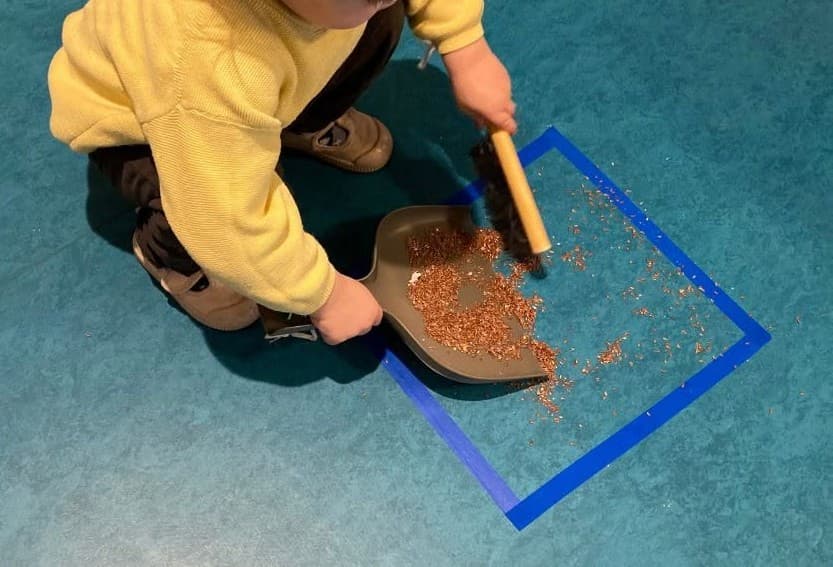
For this activity, I scattered a small amount of dry material on the floor and marked a square with painter’s tape. Then I gave my toddler a child-sized brush and dustpan and encouraged him to sweep everything into the marked area before collecting it with the dustpan.
The taped square gives toddlers a clear visual target and makes an ordinary cleaning task feel like a little challenge. It’s a wonderful Montessori practical life activity for encouraging independence while helping toddlers learn that they can take care of their own environment.
What you need: painter’s tape, a small brush and dustpan, and a small amount of dry material to sweep.
Skills practiced: hand-eye coordination, concentration, gross and fine motor control, independence, and practical life skills.
3. Rolling and Preparing Dough
Whenever we make dough at home, I like to let my toddler join in rather than simply watch. It turns an everyday kitchen task into a wonderful Montessori practical life activity.
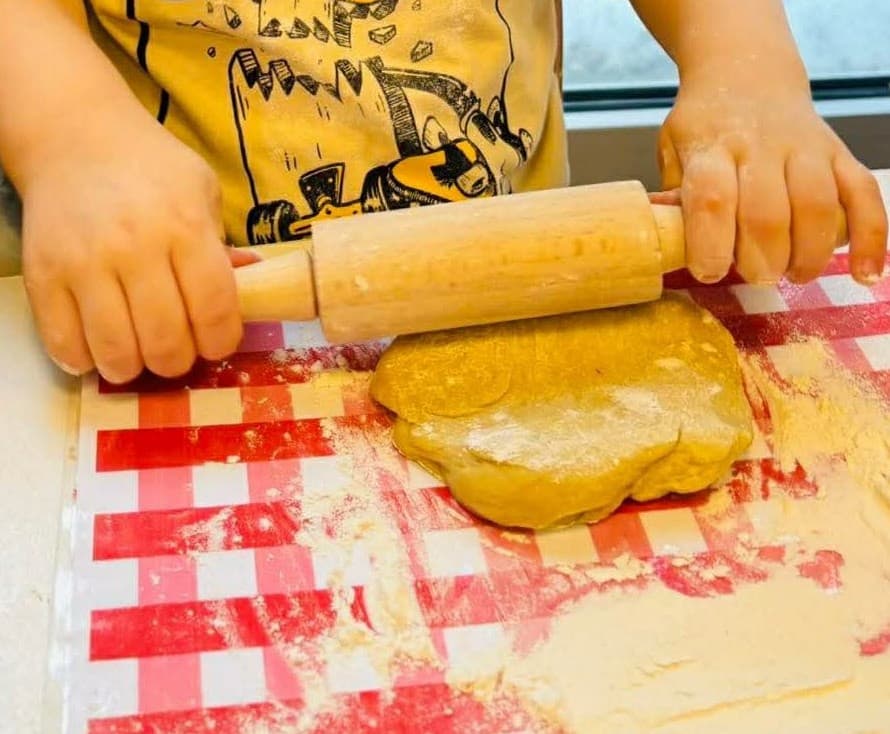
I give him a small piece of dough and a rolling pin and let him press, knead, and roll it out himself. Once it’s flat, he can use his fingers or simple cutters to make shapes and decorate the dough.
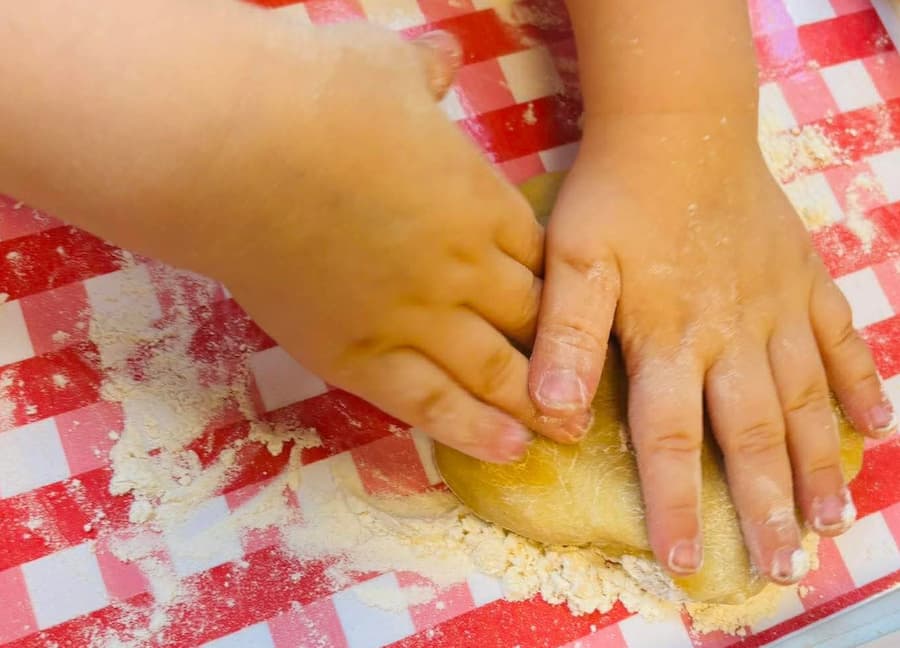
Rolling the pin with both hands, applying pressure, and manipulating the dough are all simple movements, but they give little hands plenty of work. I also love that this activity has a real purpose—my toddler gets to participate in something we’re actually making together.

And yes, flour usually ends up everywhere! I’ve learned to embrace that part too. If messy activities make you hesitate, you can read more about why I let my toddler get messy during play and why I think the benefits are worth the cleanup.
What you need: dough, a small rolling pin, a little flour, and optional cutters or decorations.
Skills practiced: bilateral coordination, fine motor skills, hand strength, concentration, independence, and practical life skills.
4. Squeezing Orange Juice
Making fresh orange juice is a lovely Montessori practical life activity because toddlers get to participate in preparing something they can actually drink afterward.
An adult should cut the orange and supervise the activity closely.
For this activity, I cut an orange in half and showed my toddler how to place it onto the juicer, press down, and twist it back and forth. Once the juice was ready, he could help pour it into his own glass.
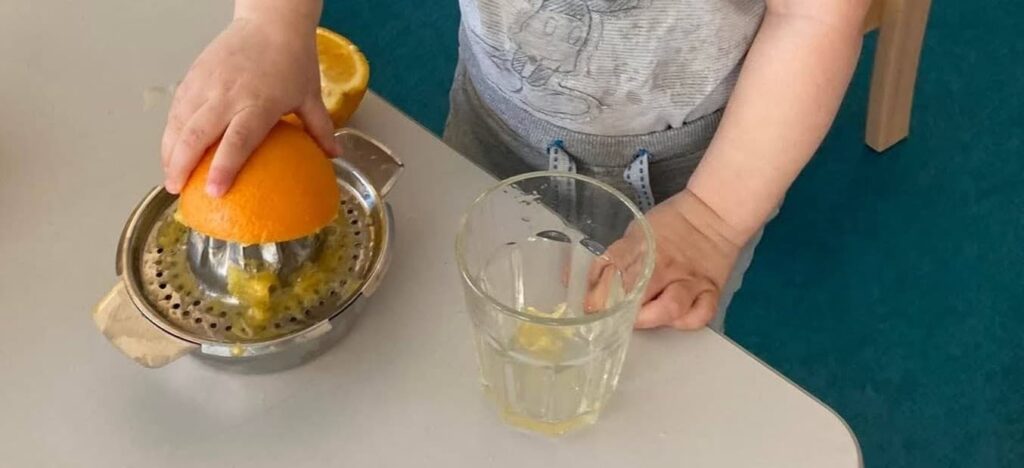
Squeezing an orange takes quite a bit of effort for little hands, making this a great way to build hand and wrist strength while practicing coordination and controlled movement. There’s also something especially satisfying for toddlers about seeing the juice appear as a direct result of their own work.
I love involving my kids in simple food-preparation tasks like this because they’re learning real-life skills rather than completing an activity just for the sake of keeping busy.
What you need: an orange, a manual citrus juicer, and a small glass.
Skills practiced: hand strength, bilateral coordination, fine motor control, concentration, independence, and food preparation skills.
5. Water Pouring Activity
Water pouring is one of those wonderfully simple Montessori activities for toddlers that can keep little hands focused while practicing a skill they’ll use every day.
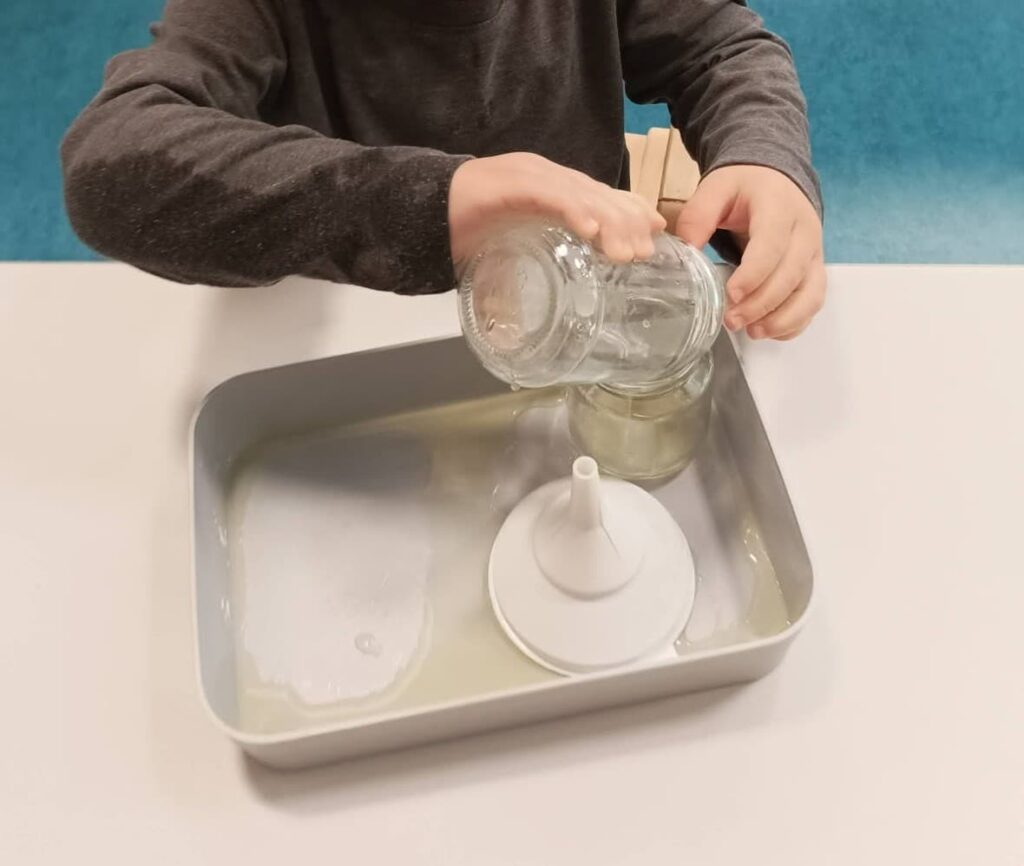
For this activity, I set out two small containers with a little water and showed my toddler how to slowly pour the water from one container into the other. I like placing everything on a tray because it defines the work area and catches the inevitable spills.
Pouring requires toddlers to use both hands carefully, judge how much to tilt the container, and stop when the other container is getting full. As they become more confident, you can add a small funnel or containers with narrower openings to make it a little more challenging.
And when water spills—and it probably will—I simply give my toddler a small cloth so he can help wipe it up. Even the cleanup becomes part of the practical life experience.
What you need: two small containers, water, a tray, a small cloth, and optionally a funnel.
Skills practiced: hand-eye coordination, bilateral coordination, concentration, controlled movement, independence, and practical life skills.
6. Rice Scooping and Transferring Activity
Always supervise closely when using small dry materials with toddlers, especially if your child still puts things in their mouth.
This simple scooping activity is one of the easiest Montessori activities for toddlers to set up, and you probably already have everything you need in your kitchen.
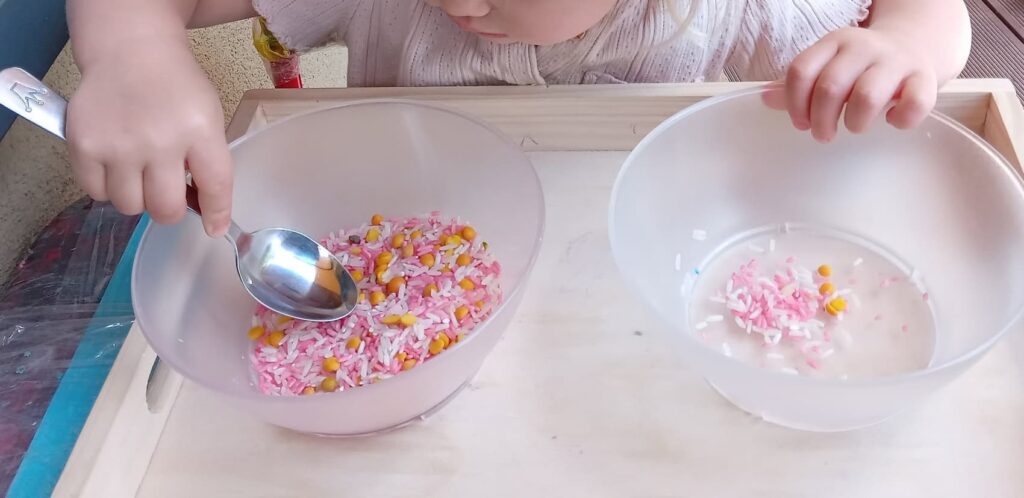
I put some dry rice into one bowl, placed an empty bowl beside it, and gave my toddler a large spoon. The goal is simply to scoop the rice from one bowl and transfer it to the other.
It sounds incredibly basic, but scooping, lifting, moving, and carefully emptying the spoon takes concentration and controlled hand movements. Toddlers also get immediate feedback when some rice misses the bowl, which gives them a chance to adjust and try again independently.
You can start with a larger spoon and two wide bowls, then make the activity more challenging later by introducing smaller spoons or containers with narrower openings.
What you need: two bowls, a spoon, a tray, and dry rice or another suitable dry ingredient.
Skills practiced: hand-eye coordination, fine motor control, concentration, spoon control, independence, and practical life skills.
7. Buttoning and Unbuttoning Activity
Learning to fasten clothing is a practical everyday skill, and it can also become a simple Montessori activity for toddlers.
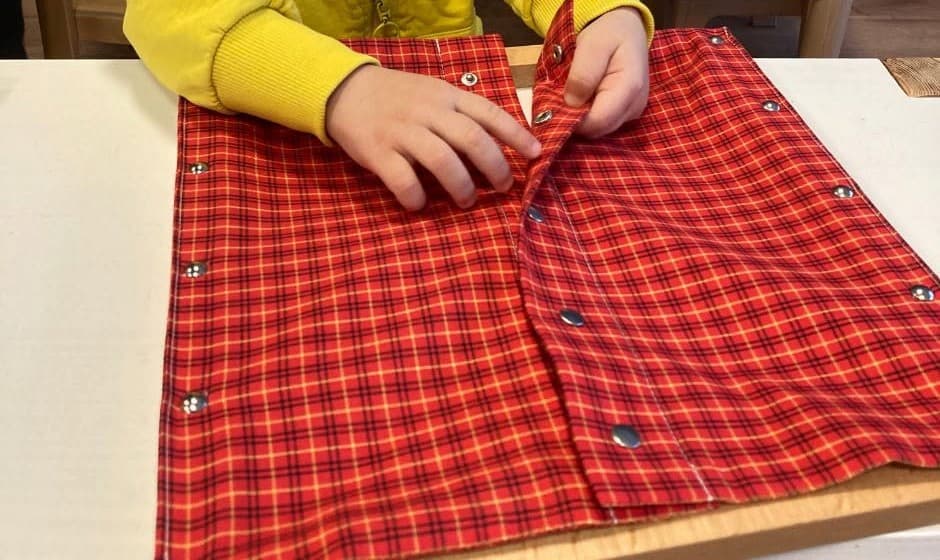
For this activity, I let my toddler practice opening and closing the fasteners on a piece of fabric. I showed him slowly how to hold the fabric with one hand while using the other hand to line up and close each fastener, then let him work through it at his own pace.
I love activities like this because the skill has a real purpose. As toddlers become more confident with buttons, snaps, and other clothing fasteners, they’re also taking small steps toward dressing themselves independently.
There’s no need to buy a special Montessori dressing frame, either. You can practice with clothing you already have at home—just choose something with fasteners that are manageable for little hands.
What you need: a shirt, cardigan, fabric dressing frame, or another piece of clothing with toddler-friendly buttons or snaps.
Skills practiced: fine motor control, bilateral coordination, hand-eye coordination, concentration, problem-solving, and independence.
8. Plant Care Montessori Activity
Taking care of a houseplant is such a simple way to involve toddlers in a real everyday responsibility.
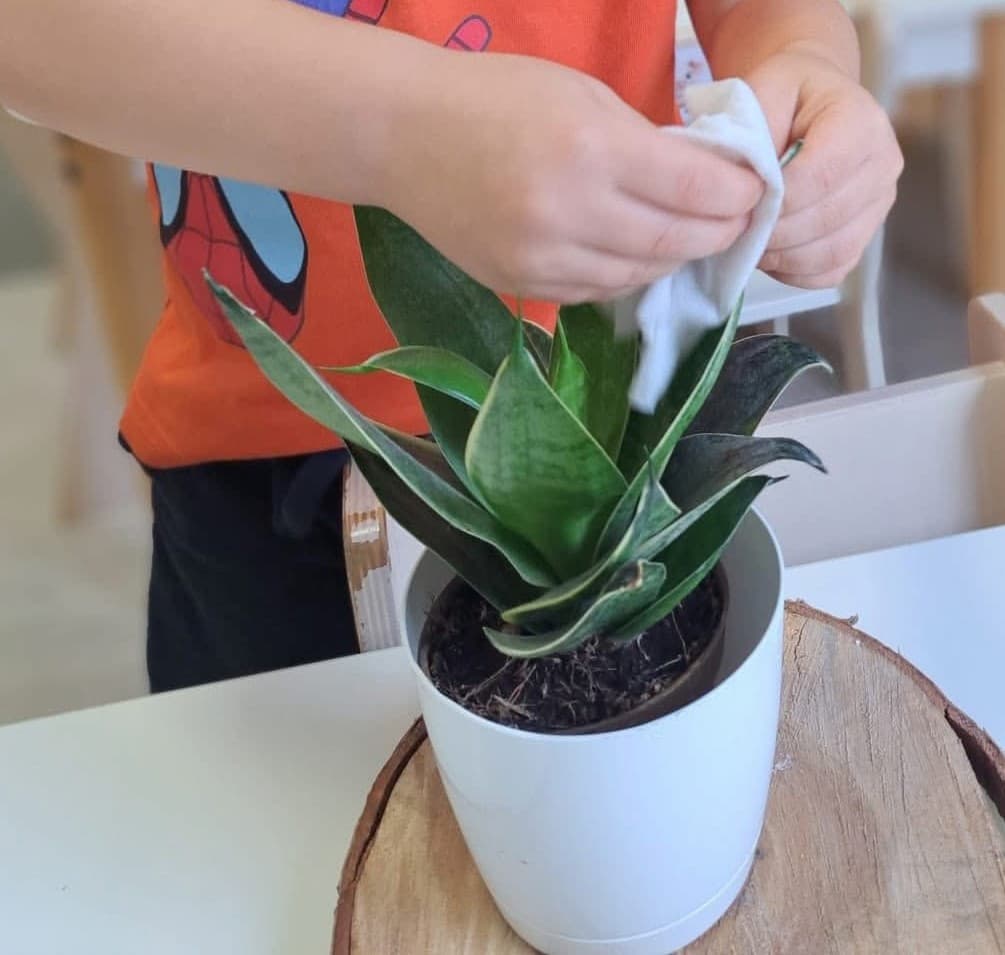
For this activity, I gave my toddler a soft cloth and showed him how to gently wipe the dust from each leaf. It requires him to slow down, hold the leaf carefully with one hand, and wipe it with the other—something that takes more concentration and coordination than you might expect.
I especially love this Montessori practical life activity because there’s a real purpose behind it. Rather than simply keeping little hands busy, toddlers get to participate in caring for something in their home and begin learning responsibility and independence.
You can extend the activity by letting your toddler help water the plant with a small watering can.
What you need: a houseplant, a soft cloth, and optionally a small watering can.
Skills practiced: concentration, bilateral coordination, gentle hand control, independence, responsibility, and care for the environment.
9. Serving Food With Tongs
Helping with mealtime can become a simple Montessori practical life activity too. Instead of always serving everything for my toddler, I like giving him opportunities to participate in preparing and serving food.
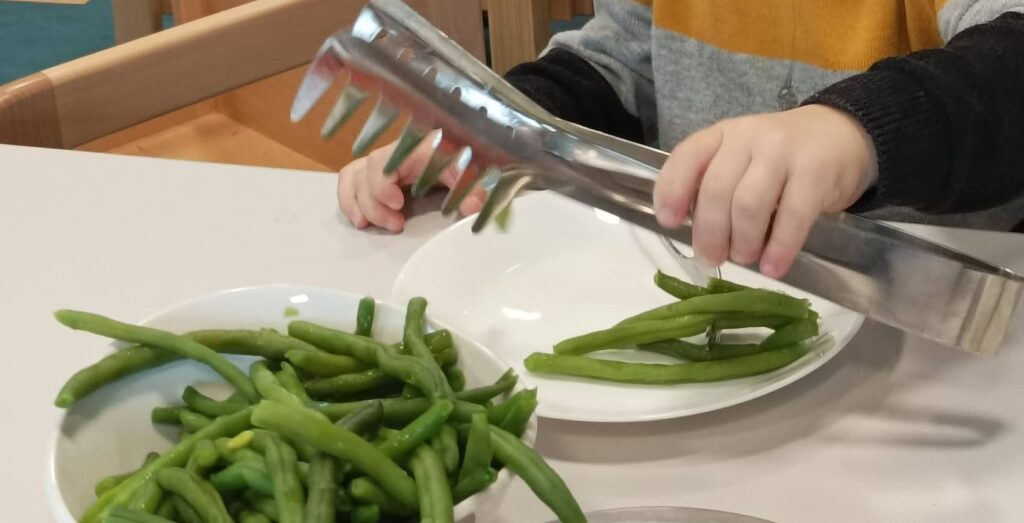
For this activity, I placed cooked green beans in one dish and showed my toddler how to use kitchen tongs to pick them up and transfer them onto another plate. He had to squeeze the tongs, carefully grasp a bean, move it across, and release it onto the plate.
Using tongs is fantastic practice for little hands because the squeezing motion helps strengthen the fingers and hand muscles while developing coordination and control. It also gives toddlers another opportunity to feel involved in a real family task.
You can try the same activity with different foods at mealtimes, choosing pieces that are easy for your toddler to grasp.
What you need: toddler-manageable kitchen tongs, two plates or bowls, and food to transfer.
Skills practiced: fine motor skills, hand strength, hand-eye coordination, concentration, controlled movement, independence, and practical life skills.
Make sure the food has cooled to a safe temperature before letting your toddler help.
10. Hanging and Taking Down Laundry
Toddlers love doing the same jobs they see adults doing, and hanging laundry is such a simple way to turn a real household task into a Montessori practical life activity.
For this activity, I gave my toddler a few small cloths and clothespins and let him hang each one on a low clothesline. He could also practice taking the laundry down afterward by squeezing each clothespin and placing the cloths into a basket.
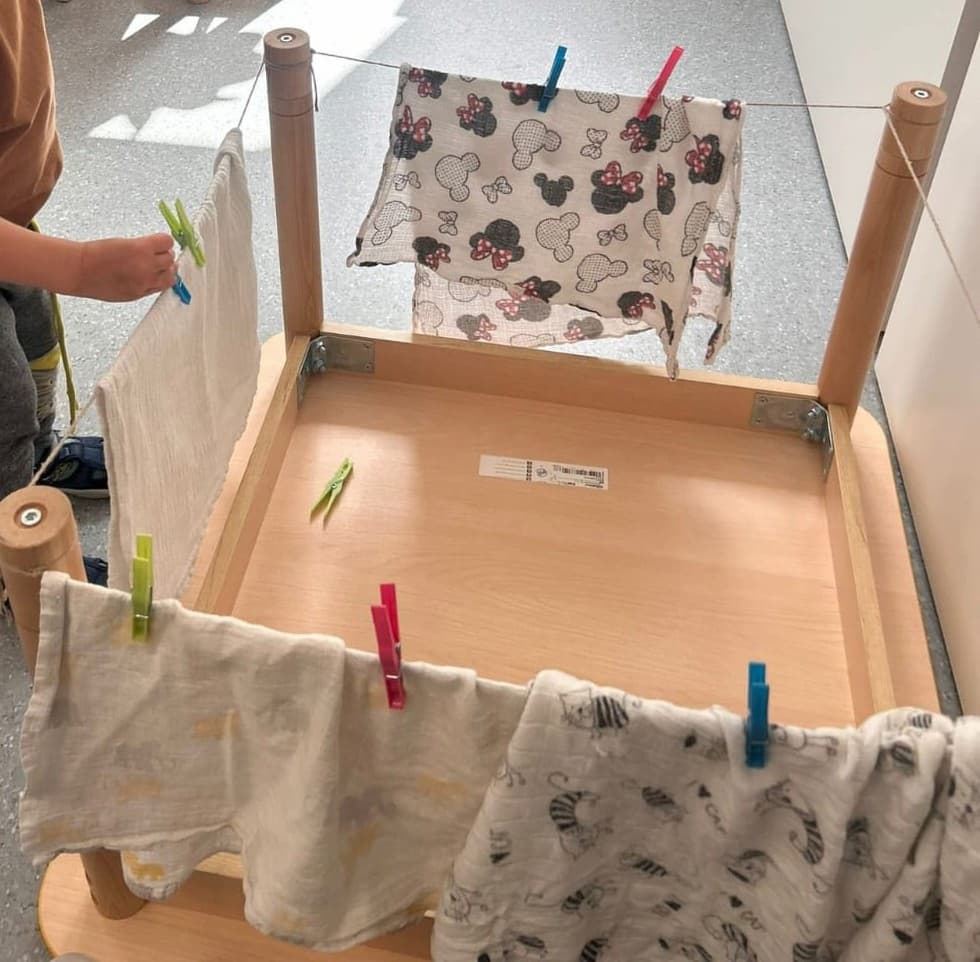
Opening the clothespins takes quite a bit of finger strength, while holding the fabric and clipping it onto the line requires both hands to work together. It’s wonderful practice for fine motor skills without needing a special toy or activity setup.
I especially love that toddlers aren’t just pretending to do a job—they’re participating in a real everyday routine and learning that they can help take care of things around the home.
What you need: a low clothesline, small cloths or washcloths, clothespins, and optionally a laundry basket.
Skills practiced: fine motor skills, hand strength, bilateral coordination, hand-eye coordination, concentration, independence, and practical life skills.
11. Cutting Strawberries
Food preparation is one of my favorite ways to introduce Montessori activities for toddlers because children get to practice real skills while helping with something the whole family can enjoy.
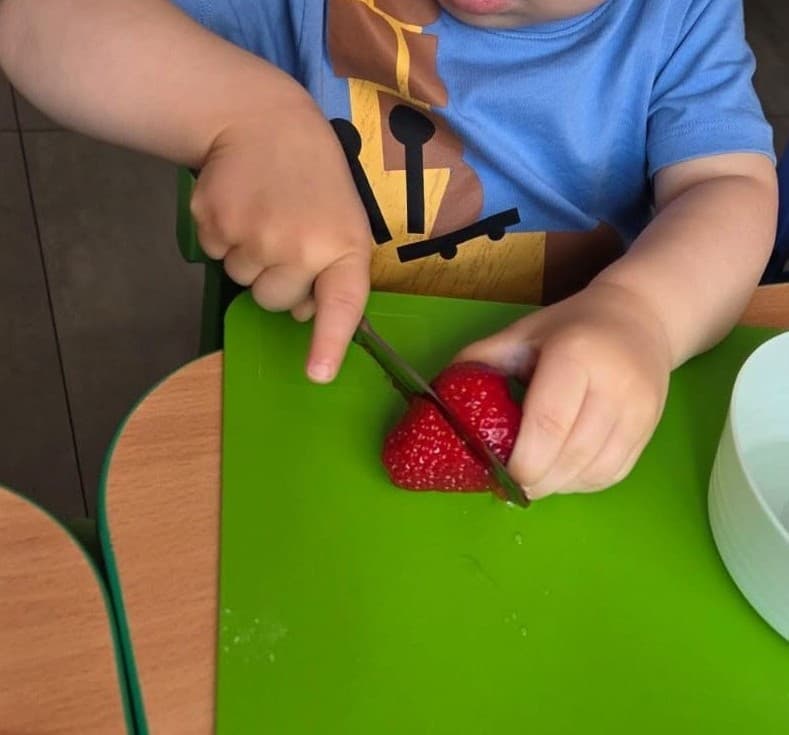
For this activity, I gave my toddler a strawberry and an age-appropriate child-safe knife and showed him how to hold the fruit steady with one hand while carefully cutting with the other.
Cutting soft foods like strawberries gives toddlers an opportunity to practice using both hands together while developing control and coordination. There’s also a wonderful sense of accomplishment when they can eat or serve something they prepared themselves.
You can start with very soft foods that are easy to cut and gradually introduce other foods as your toddler becomes more confident.
What you need: strawberries, a cutting board, a child-safe knife, and a small bowl or plate.
Skills practiced: bilateral coordination, hand-eye coordination, fine motor control, concentration, independence, and food preparation skills.
Always supervise closely and use a child-safe utensil appropriate for your child’s abilities.
12. Watering Plants
Watering plants is a classic Montessori practical life activity that helps toddlers learn responsibility while caring for something living.
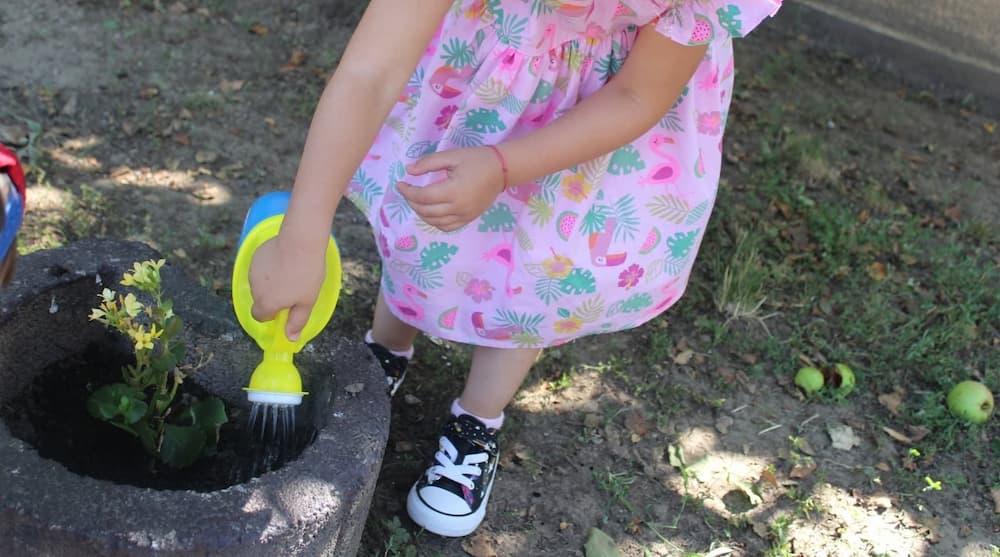
For this activity, I filled a small watering can and showed my toddler how to gently pour water around the base of the plant. The goal isn’t perfection—it’s giving children the opportunity to participate in a real task and see the results of their efforts over time.
Toddlers love having jobs that feel important, and watering plants is one of the simplest ways to build that sense of independence. It also creates opportunities to talk about what plants need to grow and how we care for the world around us.
I especially like using a child-sized watering can because it’s easier for little hands to hold and control.
What you need: a small watering can, water, and indoor or outdoor plants.
Skills practiced: hand-eye coordination, controlled movement, concentration, responsibility, independence, and care for the environment.
Tip: Start with just a small amount of water in the watering can to make it easier for toddlers to carry and pour independently.
13. Rice Scooping Into Jars
Scooping and transferring is one of the simplest Montessori activities for toddlers, and it’s easy to change the materials to keep it interesting.
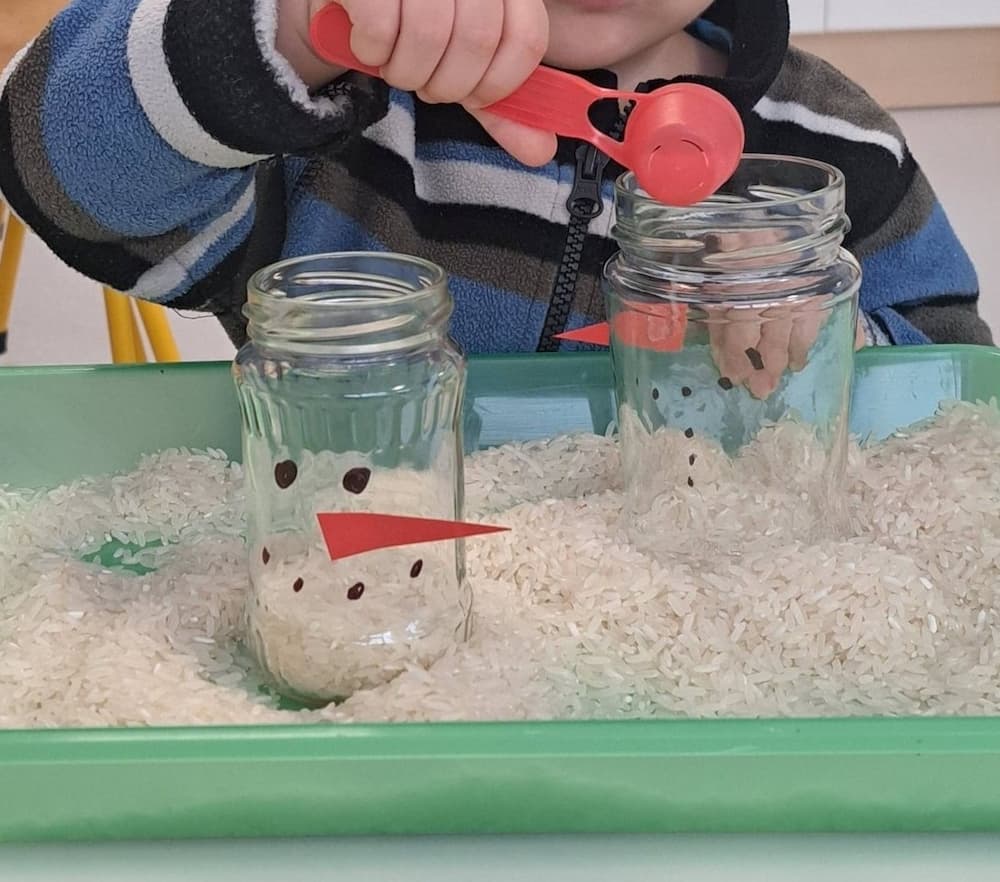
For this activity, I filled a tray with dry rice and added a couple of jars along with a measuring scoop. My toddler simply scooped up the rice and carefully transferred it into the jars.
The smaller jar opening makes this a little more challenging than transferring rice between large bowls. Toddlers have to slow down, position the scoop over the opening, and control their movement before tipping the rice in. Of course, plenty of rice may land outside the jar—and that’s part of the learning too!
You can make this activity seasonal like we did here by decorating the jars, or simply use plain containers you already have at home.
What you need: dry rice, a tray, jars or containers, and a small scoop or measuring spoon.
Skills practiced: hand-eye coordination, fine motor control, concentration, scooping, controlled movement, and independence.
Always supervise closely when using rice or other small materials with toddlers, particularly if your child still puts things in their mouth.
14. Feeding the Animals Transfer Activity
This Montessori-inspired transfer activity combines simple pantry ingredients with something many toddlers already love—playing with toy animals.

I set out a few toy animals along with dry pasta, oats, or cereal and gave my toddler a small spoon and container. He could scoop the “food” into the container, transfer it from one place to another, or use individual pieces of pasta to pretend-feed the animals.
I love how open-ended this activity is. One moment my toddler is carefully scooping with a spoon, and the next he’s picking up individual pieces with his fingers to feed the animals. Both movements give little hands plenty of fine motor practice while imaginative play keeps the activity interesting.
Best of all, you don’t need to buy special Montessori materials. A few pantry items and toys you already have at home are enough.
What you need: toy animals, dry pasta, oats or cereal, a small bowl or container, and a spoon or scoop.
Skills practiced: fine motor skills, hand-eye coordination, scooping and transferring, concentration, imaginative play, and controlled movement.
Always supervise closely when using small food items, especially if your toddler still puts things in their mouth.
15. Caring for a Baby Doll
Caring for a baby doll is a sweet Montessori-inspired practical life activity that gives toddlers a chance to practice everyday caregiving routines through hands-on play.
For this activity, I set up a small bath for the doll and let my toddler gently wash it with water. After bath time, she wrapped the doll in a towel and practiced drying its body and hair.

What I like about this activity is how naturally it connects play with real life. Toddlers are familiar with bathing, drying, dressing, and caring for themselves, so they can imitate those same routines with a doll. It’s also a lovely opportunity to practice gentleness, care, and independence.
You can extend the activity by adding a washcloth, hairbrush, or doll clothes and letting your toddler work through the whole care routine.
What you need: a washable baby doll, a small tub or basin, water, a washcloth, and a towel.
Skills practiced: practical life skills, fine motor coordination, sequencing, independence, concentration, and caring for others.
Always supervise toddlers closely around water, even when only a small amount is being used.