If you’re looking for a calm, creative, and meaningful activity for your toddler, flower dough nature art is a wonderful place to start. This simple setup combines soft dough with fresh flowers and leaves, giving little hands the chance to explore textures, practice fine motor skills, and create freely—without screens, pressure, or complicated materials.
Best of all, it’s easy to prepare, naturally engaging, and perfect for toddlers who love to touch, press, and experiment.

Why Nature-Based Sensory Play Matters for Toddlers
Toddlers learn through their senses. When they squish dough, pinch petals, and push stems into soft surfaces, they are doing much more than “just playing.”
This kind of sensory art activity supports:
- Fine motor development (pinching, pressing, grasping)
- Focus and calm attention
- Creativity without rules or expectations
- Early connection to nature
- Language development through observation and conversation
Nature materials add variety that toys often can’t—each flower feels different, each leaf bends or breaks in its own way.
What My Toddler Was Doing
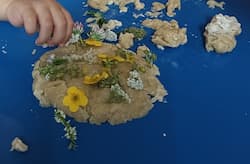
During this activity, my toddler flattened soft dough on the table and decorated it with flowers and greenery. He chose which flowers to use, experimented with how deeply to press them in, and rearranged them repeatedly.
There was no final “goal.” The joy came from the process:
- Pressing petals flat
- Standing flowers upright
- Pulling pieces out and trying again
- Feeling the contrast between soft dough and textured plants
This quiet, focused play kept him engaged far longer than I expected.
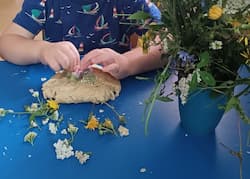
Flower Dough Nature Art Activity (Step-by-Step)
Age Range
18 months to 4 years (with supervision)
Materials You’ll Need
- Soft homemade dough or playdough (salt dough works well)
- Fresh flowers, leaves, grasses, or herbs
(Use non-toxic plants only) - A flat surface, tray, or washable table
- Optional: small bowl or cup for flowers

Step 1: Prepare the Dough
Give your toddler a lump of soft dough and place it on the table. Let them press, pat, or squash it flat using their hands.
Don’t worry about shapes—uneven edges are part of the experience.
Step 2: Offer the Natural Materials
Place flowers and greenery within easy reach. You can name colors or textures (“yellow flower,” “soft,” “long stem”), but avoid showing them what to make.
This encourages independent exploration.
Step 3: Let Your Toddler Create
Your toddler may:
- Push stems into the dough
- Press petals flat
- Rearrange pieces multiple times
- Combine many flowers or focus on just one
All of this is valuable sensory learning.
Step 4: Support Without Directing
Stay nearby and observe. Gentle comments help build language without interrupting focus:
- “You pressed that flower very deep.”
- “That one feels bumpy.”
- “You chose lots of yellow today.”
Try not to correct or redesign their work.
Step 5: Let the Artwork Be Temporary
You can take a photo if you’d like, but it’s okay to let the dough and flowers go afterward. Toddlers don’t need permanence to benefit from creative play.
Skills This Activity Builds
- Fine motor control
- Hand strength
- Sensory processing
- Creativity and independence
- Emotional regulation through calm play
Safety & Practical Tips
- Always supervise (small pieces may go into mouths)
- Avoid unknown or potentially toxic plants
- Expect mess—crumbs are part of sensory learning
- Keep a damp cloth nearby for quick cleanup
A Simple Way to Slow Down and Connect
Flower dough nature art is a reminder that toddlers don’t need elaborate setups to learn and thrive. With a bit of dough and a handful of flowers, you’re offering your child time to explore, create, and connect—with their hands and with the natural world.
If you try this activity, notice how long your toddler stays engaged. You may be surprised by how calming simple play can be—for both of you.